Damaged timber in your home can mean several things, and getting the diagnosis wrong can be a costly mistake. Termite damage, water damage and wood rot share some frustratingly similar signs – swollen timber, soft spots, discolouration and a musty smell. But each has a distinct cause, a different fix, and very different consequences if left untreated.
In Queensland, where warm and humid conditions create prime conditions for all three problems, knowing what you are dealing with is the first step towards protecting your home. Here is how to tell them apart.
What Does Termite Damage Look Like?
Termites (often called white ants in Australia) attack timber from the inside out hollowing it out while leaving the surface largely intact. This is why termite damage is so often missed until it is well advanced.
The most reliable signs of termite activity include:
- Hollow-sounding timber – tap on skirting boards, door frames or exposed timber and listen for a papery, hollow sound rather than a solid knock
- Cork-like speckling – a distinctive patterning on the surface of affected timber that resembles cork, common with Australian termite species
- Venetian blind patterns – visible gouging or channelling in the grain of the wood where termite galleries have been exposed
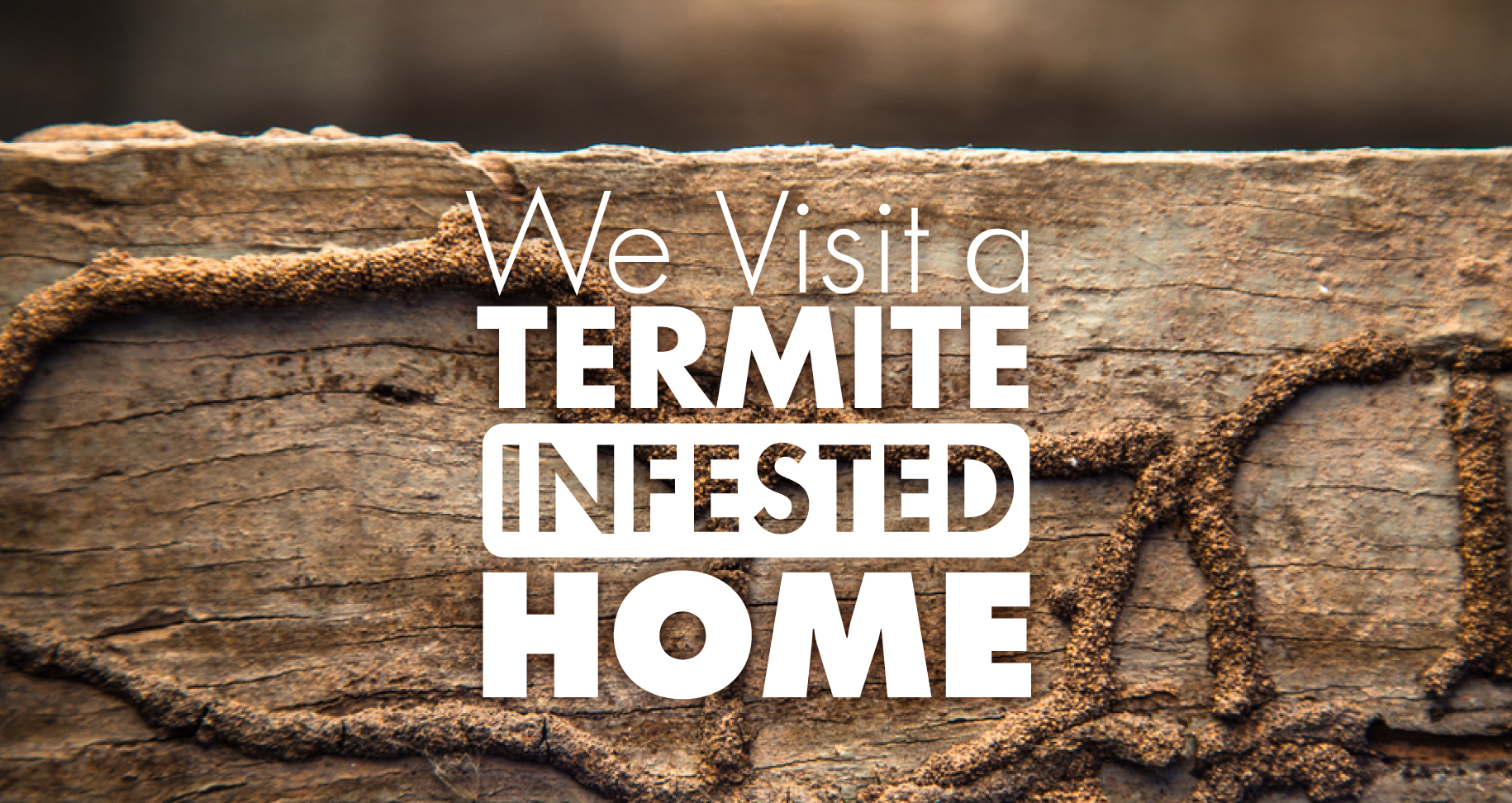
- Mud tubes – pencil-sized tunnels of earth running along walls, foundations or subfloor timbers, which termites build for protection as they travel
- Mudding – termites always seal their workings with mud; if damaged timber has no mud present, it is likely not termites
One critical distinction: termite-damaged timber is hollow and papery, not soft and spongy. The exterior surface may look fine right up until it gives way entirely. This is what makes termites so dangerous and why professional termite inspections are so important.
Termites can also mimic the visual signs of water damage – blistering, slight swelling and a mouldy scent – but there will be no water staining around the area and the timber will not feel waterlogged.

What Does Water Damage Look Like?
Water damage results from an external moisture source – a leaking roof, burst pipe, faulty guttering, or a failed damp course. Unlike termite damage, water-damaged timber feels noticeably different to the touch.
Key signs of water damage include:
- Soft, spongy texture – the timber feels yielding and may sag under pressure
- Dark staining – discolouration radiating outwards from the moisture source
- Paint bubbling or peeling – particularly around windows, walls and frames where water is seeping behind surfaces
- Warped or swollen wood – timber expands as it absorbs water, causing doors to stick and floors to bow
- Musty smell – a strong indicator of mould or mildew growing within the damp material
- Alligatoring pattern – severe water damage can cause wood to crack into small square-shaped cells, sometimes called cubicle rot, because the pattern resembles an alligator’s back
The presence of visible water staining and the spongy feel of the timber are the clearest signals you are dealing with a water issue rather than a termite problem. It is also worth noting that water damage and blocked gutters can cause significant structural harm over time – something we have covered in detail here.
What Does Wood Rot Look Like?
Wood rot, or fungal decay, is caused by fungi feeding on moist timber. Like water damage, it requires a source of ongoing moisture to develop, but it is a biological process rather than a physical one. There are two main types: wet rot and dry rot.
Wet rot is the more common of the two. It requires high moisture content (around 50%) and stays localised near its moisture source. Affected timber appears darker than surrounding wood, feels soft and spongy, and may show visible white fungal growth. When dry, the wood crumbles easily.
Dry rot is more serious. It only needs around 20% moisture content to thrive and can spread beyond the original timber into surrounding building materials. It leaves wood with a dry, greyish appearance and deep cubicle cracking, with a silky grey fungal growth that can shed reddish dust.
General signs that point to wood rot over termites or water damage include:
- Weak, fibrous timber – the wood can be pulled apart by hand and cannot produce a splinter; if you cannot make a splinter from suspect timber, fungal decay is the likely culprit
- No mud present – unlike termite damage, there is no mudding or sealing of the affected area
- Cracking with dark lines running through the timber
- Musty, damp odour with visible mould or fungal growth
It is also worth knowing that wood rot and termites are closely linked. Any fungi producing rot also produces an odour that can actively attract termites. Soft, decayed timber is an easy food source, meaning a rot problem can quickly become a termite problem if left unaddressed. You can read more about our approach to termite treatment and prevention here.
The Overlap Problem
The most challenging situations arise when more than one of these issues is present at the same time. Termites are drawn to moisture and decay, so it is common to find all three together in an older home with poor drainage or ventilation. When decayed timber is also being attacked by termites, the mess of mushy wood and unclear staining can make diagnosis very difficult without professional tools.
This is where advanced detection technology makes a real difference. Termite detection methods such as moisture meters, thermal imaging and Termatrac devices (which use microwave radar to detect movement inside walls) can identify active termites that are completely invisible to the naked eye. A moisture meter will also help distinguish between a live water leak, residual moisture from past damage, and the humidity trail left by termite activity.
When to Call a Professional
If you are unsure what you are dealing with, the safest course of action is a professional inspection. Australian Standard AS 4349.3 governs timber pest inspections and requires a non-invasive examination using specialist equipment. DIY investigations are useful for spotting obvious signs, but they cannot tell you whether termites are currently active behind your walls, or how far moisture has penetrated your subfloor.
Termites alone cause an estimated $1.5 billion in damage to Australian homes each year, and most home insurance policies do not cover termite damage. Early detection is the most cost-effective protection available.
If you have noticed any of the signs described in this article – hollow timber, mud tubes, soft or discoloured wood, or unexplained musty odours – do not wait. Contact the Cure All Pest Control team for a professional termite inspection and let our experts determine exactly what you are dealing with before it becomes a much bigger problem.