Redbank Plains sits squarely at the centre of one of South East Queensland’s fastest-growing corridors. Positioned roughly 34 kilometres southwest of Brisbane and within the City of Ipswich, the suburb has grown from a population of just under 20,000 in 2016 to more than 24,000 by the 2021 census – a 26% increase in five years – and that growth shows no sign of slowing. Billions of dollars in infrastructure investment are flowing into the Western Growth Corridor, new housing estates continue to open across the area, and young families are arriving in numbers that make Redbank Plains one of Queensland’s most demographically distinct suburbs: the predominant age group is 0 to 9 years old, reflecting just how many households here are in their early child-raising years.
All of that growth brings opportunity. It also brings pest pressure in forms that many new residents are entirely unprepared for. Redbank Plains has a set of geographic, geological and environmental characteristics that make it one of the more demanding pest management environments in greater Brisbane – and the combination of rapid new development, young housing stock and a predominantly family-oriented community means the stakes of getting pest control wrong are particularly high.
What Makes Redbank Plains a Challenging Pest Environment
Three factors distinguish Redbank Plains from most other suburbs covered in this series, and all three operate independently of each other while compounding the overall risk.
The first is soil. Redbank Plains is a flood plain and black soil is common throughout the area. Black clay soils – also known as Vertosols – shrink and swell dramatically with moisture changes, which creates movement in structures built on them and opens up new entry points for pests as seasonal conditions shift. The red podzolic soils in other parts of the suburb, derived from weathered sedimentary rock, have their own characteristics that influence how termite colonies behave and how effectively chemical treatments perform over time.
The second is water. Six Mile Creek and its tributaries run through the area, and the flood plain character of the suburb means significant portions of land retain moisture well into the dry season. Properties in lower-lying pockets are subject to periodic inundation that both elevates pest activity and – critically – can compromise existing soil-applied termite treatments.
The third is land clearance. The rapid conversion of what was until recently open eucalypt woodland and farmland into residential estates displaces established pest populations – including termites, rodents and spiders – directly into the yards and wall cavities of newly built homes. Pests that previously nested in old trees, stumps and root systems do not disappear when land is cleared; they relocate, and the nearest available timber structure is the obvious destination.
Termites: High Risk, Multiple Drivers
Termites are commonly found in Redbank Plains, with an estimated one in five homes affected. That figure aligns with broader Queensland statistics but is given additional weight in Redbank Plains by the specific local conditions described above.
New Estates on Cleared Land: The First Five Years Are Critical
When a residential estate is developed on previously vegetated land, existing termite colonies lose their food source and begin foraging outward. Newly constructed homes on these estates typically receive a chemical under-slab treatment during construction, which provides a reliable level of protection – but only for approximately eight years, and only if the treatment was correctly applied and has not been disturbed by subsequent earthworks.
Many Redbank Plains homes from the estates built in the late 2000s and through the 2010s are now approaching or have passed that window. For homes built on lots where the soil was disturbed during development – particularly those where tree stumps or root systems were left in the ground during earthworks – the risk is front-loaded. Root systems from cleared eucalypts can sustain termite colonies for years after the tree has been removed, providing a colony with both food and a point of origin from which to extend foraging tubes towards the nearest structure.
Soil Type and Treatment Effectiveness
The physical and chemical properties of the soil surrounding a home directly affect the reliability and efficiency of termiticide treatments over time. Clay content, pH and organic matter content all play a role in how quickly termiticide degrades in soil. Redbank Plains’ black clay soils are particularly relevant here – the swelling and cracking that occurs seasonally in these soils can disrupt the continuity of chemical treatment zones, creating gaps that provide undetected entry pathways for termites. Properties on clay-dominant soil should factor this into their inspection frequency.
Flooding and Soil Treatment Integrity
When flooding occurs – and Redbank Plains’ position as a flood plain means this is a realistic periodic event rather than a remote possibility – soil-applied termite treatments can be diluted, displaced or rendered ineffective by inundation. Properties that have experienced flooding since their last treatment should have their termite protection reassessed by a licensed professional, regardless of when the original treatment was applied. Baiting systems, which are not dependent on soil chemical integrity, are often recommended for properties in flood-affected areas as a more reliable long-term approach.
Warning Signs to Watch For
- Mud leads running up internal or external walls, concrete stumps or fence posts
- Flooring that gives slightly underfoot or sounds hollow when walked over
- Door and window frames that have swollen or become difficult to operate without any obvious moisture source
- Discarded wings collecting near internal lights or window sills, typically in spring and early summer
- A faint tapping or rustling inside wall cavities
Annual termite inspections in line with Australian Standard AS 3660 are the minimum for Redbank Plains properties. For homes on former cleared land, those that have experienced flooding, or those with established trees close to the structure, six-monthly inspections are advisable. Cure All Pest Control uses Termatrac detection radar, thermal imaging and moisture assessment technology to locate activity without damaging your home.
Fire Ants: A Serious Local Risk
Fire ants deserve specific attention in any pest guide for Redbank Plains. This is not a theoretical risk imported from interstate news coverage – it is a documented, locally confirmed problem.
Following flooding events, 250 fire ant nests were discovered on Mount Juillerat Drive in Redbank Plains alone, prompting a formal warning from Ipswich City Council. Fire ants are capable of ‘rafting’ on floodwater – the colony clings together and floats as a mass, capable of surviving for extended periods and colonising new areas when the water recedes. Ipswich sits within a declared biosecurity zone with many known fire ant outbreak areas.
Fire ants (Solenopsis invicta) are an invasive species from South America. They are aggressive when disturbed, deliver a painful burning sting, and in rare cases can trigger severe allergic reactions. Their nests appear as dome-shaped mounds in open, sunny ground – lawns, road verges, garden beds and sports fields – and are often difficult to distinguish from other ant activity until the colony is disturbed.
Cockroaches: New Homes Are Not Immune
A common misconception among residents of newer housing estates is that a recently built home offers inherent protection against cockroaches. It does not. Cockroach populations in an area predate the housing itself, and new construction creates the warm, enclosed spaces that several species specifically seek out.
German Cockroaches in Modern Homes
The German cockroach (Blattella germanica) is equally at home in a brand-new kitchen as in an older one. Kitchen cabinetry, appliance motors, plumbing beneath sinks and bathroom vanity units all provide the warm, humid harbourage this species needs. In Redbank Plains’ predominantly family households, where cooking activity is high and food is handled frequently, conditions for German cockroach establishment are consistently present.
German cockroaches reproduce rapidly – a single fertile female can produce hundreds of offspring – making early treatment far more cost-effective than waiting until the infestation is visible in open areas of the home.
American and Australian Cockroaches
American cockroaches (Periplaneta americana) are associated with drainage infrastructure and subfloor spaces. In newer estates, poorly graded stormwater drainage around house slabs and the disturbed soil of recently completed landscaping can provide ideal ground-level harborage for this species.
Australian cockroaches (Periplaneta australasiae) are garden and mulch dwellers that enter homes through gaps around utility penetrations, under doors and through subfloor vents. They are common in Redbank Plains’ larger suburban blocks where garden beds are close to the home’s perimeter.
Prevention Strategies for Redbank Plains Homes
- Ensure mulch and garden beds are kept at least 300mm clear of external walls
- Check that weep holes and subfloor vents are unobstructed and intact
- Seal gaps where plumbing and electrical conduit enter wall cavities
- Store food – including pet food – in airtight containers
- Remove garbage regularly and keep bin areas clean
Rodents: Cleared Land Displaces Established Populations
The relationship between land development and rodent activity is direct. When paddocks, scrubland and old orchards are cleared and subdivided, the rodent populations living in that vegetation are displaced. In a rapidly developing suburb like Redbank Plains, this displacement is ongoing, with new estates pushing established populations further into existing residential streets with each new stage of development.
Roof Rats in Suburban Homes
The roof rat (Rattus rattus) is the species most commonly encountered inside Redbank Plains homes. As a capable climber, it accesses ceiling voids via roof tiles, eaves gaps, overhanging trees and downpipe connections. Inside roof spaces, it gnaws on electrical cabling, plastic plumbing fittings and stored items. The fire risk from damaged wiring is significant, and the contamination of ceiling insulation with droppings and urine is a health concern in homes where young children spend considerable time indoors.
Nighttime ceiling noise is the most common trigger for pest control call-outs: a rolling or scurrying sound that often intensifies as the colony grows.
Norway Rats and Mice in New Estates
Norway rats (Rattus norvegicus) burrow in the disturbed soil common to new estates – beneath concrete slabs, along fence lines, within garden retaining walls and near compost and waste storage areas. Properties adjacent to undeveloped land, drainage easements or remnant vegetation patches face the most consistent Norway rat pressure as development encroaches.
House mice (Mus musculus) are adaptable opportunists that exploit the imperfect seals common in newly completed construction – gaps around conduit penetrations, unfinished wall cavities and the minor shrinkage cracks that develop in new plasterwork. They are quick to establish in homes where grain-based foods, pet food or bird seed are accessible.
Reducing Rodent Entry Points
- Inspect the roofline and eaves for gaps before and after storm season
- Fit screens to downpipes where they connect to the roof
- Store pet food in sealed, hard-sided containers indoors
- Clear weeds and long grass from fence lines and property boundaries
- Keep compost in closed bins and avoid adding meat or cooked food scraps
Ants: Prolific Species Across Established and New Estates
Beyond fire ants, Redbank Plains residents deal with a wide range of native ant species that exploit the suburb’s combination of red and black soils, grassed open space and garden landscaping.
Coastal Brown Ants and the Budding Problem
The coastal brown ant (Pheidole megacephala) is one of the most troublesome species for Redbank Plains homeowners. It forms enormous, multi-queen colonies that extend across garden beds, under pavers, along fence lines and into wall voids. Surface treatments with over-the-counter products typically cause colonies to bud – splitting into multiple satellite nests rather than dying off – which expands the infestation rather than resolving it. Professional treatment targeting colony structure is the only reliable approach.
Black House Ants, Meat Ants and Garden Species
Black house ants trail into kitchens and bathrooms in pursuit of sweet foods and water. Meat ants (Iridomyrmex purpureus) establish large, visible nests in open grassed areas throughout the suburb and can be aggressive when approached. Green-headed ants are common in lawn areas and deliver a sharp sting when disturbed – a consideration in a suburb where the dominant age group is under ten.
Mosquitoes: Flood Plain Geography Creates Sustained Pressure
Redbank Plains’ position as a flood plain is the defining factor in its mosquito profile. The Brisbane River proximity and frequent flooding events increase moisture levels across the area, creating conditions that sustain mosquito populations well beyond the immediate wet season period. Six Mile Creek and its drainage network provide both permanent and semi-permanent breeding habitat that natural dry periods do not fully eliminate.
In a suburb where backyard space is generous and outdoor family activity is central to daily life, mosquito management has practical and health implications beyond nuisance. Ross River virus is transmitted by local mosquito species and remains a genuine risk in the Ipswich region.
Practical Breeding Site Management
- Empty any vessel that holds standing water after each rainfall event – including children’s outdoor toys, sandpit covers and wheelbarrows
- Ensure roof gutters are clear and draining freely before the wet season
- Treat ornamental ponds and permanent water features with biological larvicide
- Maintain pool water chemistry even during winter when the pool is infrequently used
- Cut back long grass and dense vegetation near the home’s perimeter, as adult mosquitoes rest in shaded, humid ground-level vegetation
Spiders: Bush Proximity and Open Space Bring Variety
Redbank Plains’ semi-rural character – larger blocks, open land nearby and remnant vegetation – creates regular contact between residents and spider species that are less commonly encountered in more urbanised suburbs closer to Brisbane.
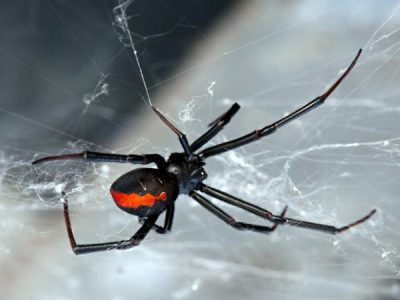
Redback spiders (Latrodectus hasselti) are present throughout the suburb and are reliably found in outdoor structures, garden sheds, children’s play equipment, outdoor furniture and garage shelving. Their presence around children’s play areas is a specific concern in a suburb with such a high proportion of young families.
Funnel-web adjacent species may be encountered in gardens near remnant bushland and in properties backing onto undeveloped land. Any spider resembling a funnel-web should be treated with caution and not handled. A pest professional can assist with identification.
Huntsmen spiders are extremely common in Redbank Plains homes, particularly those near open land or with established trees close to the structure. White-tailed spiders are regularly found inside bedrooms and bathrooms. Both species are manageable through regular perimeter treatment.
Wolf spiders deserve mention in Redbank Plains specifically because of the suburb’s large block sizes, grassed yards and open spaces. These ground-dwelling spiders are faster than most and are frequently encountered by children playing on lawns.
Fleas and Ticks: A Pet-Owning Suburb’s Persistent Challenge
Redbank Plains’ demographic profile – young families, large blocks and an outdoor lifestyle – means pet ownership rates are high. That translates to elevated flea and tick risk compared with higher-density, inner-city suburbs.
Fleas establish in carpet, soft furnishings and bedding when pets carry them indoors. They can survive for extended periods in the larval stage without a host, meaning that even homes that have been empty for weeks can present active flea populations when occupied again. This is particularly relevant for rental properties between tenancies.
The paralysis tick (Ixodes holocyclus) is present in south-east Queensland and while less prevalent in suburban Redbank Plains than in coastal bushland areas, properties that back onto remnant vegetation or that are visited by bandicoots and possums can experience tick activity. Pet owners should check animals after time outdoors and consult a veterinarian regarding tick prevention products.
Seasonal Pest Patterns in Redbank Plains
The Ipswich region’s subtropical climate drives a recognisable pest calendar:
- Summer (December – February): Peak mosquito and cockroach activity. Flying termites (alates) swarm on humid evenings. Fire ant colonies are most active and visible. Rodents increase foraging activity during dry spells.
- Autumn (March – May): Rodents begin seeking shelter indoors as nights cool. Spider activity peaks after a productive summer breeding season. Residual soil moisture from wet season sustains termite colony activity.
- Winter (June – August): The drier, cooler conditions are ideal for termite inspections. Pest activity slows outdoors but cockroaches and rodents remain active inside. A good time to identify and seal potential entry points before spring.
- Spring (September – November): Termite swarming season begins, often coinciding with the first significant rains. Ant colonies expand rapidly. Fire ant nests become more visible as the ground warms and dries slightly after early storms.
New Builds and Pre-Purchase Inspections
Two specific scenarios in Redbank Plains warrant particular attention.
For buyers purchasing in new estates, a pre-purchase pest and building inspection is essential – not optional. New homes in recently developed areas can have termite protection systems already compromised by post-construction earthworks, landscaping or the premature degradation of under-slab treatments due to soil movement. An inspection before settlement can identify these issues while there is still scope to negotiate remediation with the vendor or developer.
For those building a new home, the choice of termite management system at construction is a long-term decision. Chemical under-slab treatment alone is not always sufficient in high-movement clay soils. A licensed pest professional can advise on whether a physical barrier, reticulation system or monitoring station approach better suits your specific site conditions. Cure All Pest Control’s termite inspection service provides a thorough assessment of risk factors specific to your property.
Protect Your Redbank Plains Home With Cure All Pest Control
From termite inspections and fire ant identification to cockroach, rodent and spider management, Cure All Pest Control services Redbank Plains and the broader Ipswich and western Brisbane corridor. Our licensed technicians understand the specific pest pressures of this rapidly developing area and provide evidence-based treatment and long-term protection tailored to your property type and site conditions.
Call us today or request a quote online to book an inspection or discuss a pest management plan that suits your home and family.