Perched on a prominent bend of the Brisbane River just two kilometres from the CBD, New Farm occupies one of the most enviable positions of any inner-city suburb in Queensland. Its streets are lined with some of Brisbane’s finest heritage homes – Federation-era Queenslanders, interwar bungalows, art deco apartment blocks and converted woolstore buildings – alongside a dense layer of modern units and townhouses that reflect decades of inner-city intensification.
That layering of old and new, combined with the suburb’s riverside setting, mature tree canopy and proximity to parks and restaurant precincts, creates a pest environment that is genuinely unique. Pest control in New Farm presents challenges that differ meaningfully from those in Brisbane’s outer suburbs, and understanding what those challenges are can save property owners and tenants significant time, money and stress.
What Makes New Farm a High-Pressure Pest Environment
New Farm’s character is defined by density and age. Units and apartments make up over 70% of the suburb’s dwelling mix, making it one of the most densely populated parts of greater Brisbane. At the same time, the suburb retains a substantial collection of heritage timber homes – some dating back to the late 19th century – that carry their own very specific pest vulnerabilities.
Brunswick Street divides the suburb in two distinct residential characters: to the south, large ornate Queenslanders and tall apartment buildings predominantly along the river; to the north, more modest Queenslander-style homes with fewer large trees. Both sides of that divide present pest pressures, but of different kinds.
Add the Brisbane River wrapping around the peninsula on three sides, New Farm Park’s expanse of mature parkland, the restaurant and café strip along James Street, and a transient rental population, and the result is one of Brisbane’s more complex pest management environments.

Termites: The Urgent Priority for New Farm’s Timber Housing Stock
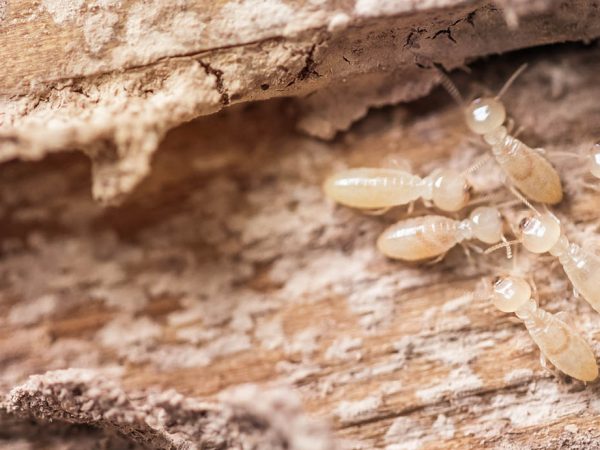
No pest represents a greater financial threat to New Farm property owners than termites. The suburb’s age and its concentration of timber construction make this a non-negotiable consideration for anyone who owns or is looking to purchase in the area.
Why the Heritage Housing Stock Is Especially Vulnerable
New Farm’s oldest homes were built predominantly from hardwood timber – stumps, bearers, joists, wall framing and cladding – at a time before modern termite management practices existed. Many of these homes have had multiple owners and multiple partial renovations over the decades. Renovations that introduce new soil-to-timber contact points, disturb existing (often long-expired) chemical treatments, or inadvertently create moisture traps inside wall cavities can significantly increase a property’s termite exposure.
The suburb contains a mix of 19th century colonial constructions, 20th century traditional Queenslander and Federation homes, and modern architectural hybrids. Each building era presents its own vulnerabilities: the oldest homes may never have had any formal termite protection; interwar homes may have had chemical soil treatments that expired decades ago; and modern infill developments may have had under-slab treatments that are now past their effective lifespan.
The River and Moisture Connection
Subterranean termites – particularly Coptotermes acinaciformis, the species responsible for the vast majority of structural damage across south-east Queensland – are drawn to moisture as strongly as they are to timber. The Brisbane River’s influence on local groundwater levels, combined with the high water table across parts of New Farm’s peninsula, keeps soil moisture elevated in ways that directly support termite colony activity. Properties in lower-lying areas, or those that have experienced flooding, face compounded risk.
Warning Signs to Look For
- Mud leads tracking up stumps, brick piers, internal walls or pipe penetrations
- Softness or spring underfoot in hardwood floors
- Hairline cracks or blistering in paint on skirting boards and door jambs
- A faint clicking sound from inside wall cavities
- Discarded wings near window sills or light fittings, typically in spring
Annual professional termite inspections to Australian Standard AS 3660 are essential for all New Farm properties – heritage homes especially. Cure All Pest Control uses Termatrac detection radar, thermal imaging and moisture assessment technology to locate hidden activity without causing damage to the property.
Cockroaches: Dense Living Amplifies the Problem
Cockroaches are ubiquitous across Brisbane, but in New Farm’s high-density residential environment they present with particular intensity. The suburb’s restaurants, cafés, share houses and apartment complexes provide abundant food and harbourage, and the challenges of eliminating cockroaches from multi-unit buildings are well known to professional pest controllers.
German Cockroaches in Apartment Buildings
The German cockroach (Blattella germanica) is the dominant problem species in New Farm’s units and apartments. Compact, fast-breeding and well-adapted to the warm, humid conditions inside kitchen cabinets, appliance motors and bathroom vanities, this species exploits the interconnected nature of apartment buildings with remarkable efficiency. Infestations travel through plumbing penetrations, shared wall voids and ceiling spaces, meaning that one affected unit can seed neighbouring properties relatively quickly.
Building-wide treatment is almost always necessary for effective long-term results. Spot treatments of individual apartments rarely hold because they do not address the broader population distributed throughout the building.
American and Australian Cockroaches
American cockroaches (Periplaneta americana) are larger, darker and most commonly associated with stormwater drains, underground infrastructure and subfloor spaces beneath older buildings. New Farm’s ageing drainage network and the many homes with accessible subfloor voids provide ample habitat. They can cover considerable distances at night and may enter multiple properties within a short stretch of street.
Australian cockroaches (Periplaneta australasiae) are most active in gardens and landscaped areas, where they shelter under mulch, in compost and amongst leaf litter. They are frequently found in subfloor spaces and wall voids of homes adjoining garden beds.
Practical Steps for Residents
- Wipe down bench surfaces and the underside of appliances regularly
- Avoid leaving food – including pet food – uncovered overnight
- Inspect under-sink areas for dripping pipes and condensation
- Seal gaps around water and gas supply lines entering cabinetry
- Report cockroach sightings to body corporate managers in apartment buildings promptly
Rodents: Peninsula Geography Creates Concentrated Pressure
New Farm’s three-sided riverside setting means that rodents moving along the Brisbane River’s banks are effectively funnelled onto the peninsula. Rather than dispersing across a wide suburban landscape, populations concentrate in parks, stormwater infrastructure and residential gardens, creating higher rodent pressure per square kilometre than in many outer suburbs.
Roof Rats: The Most Common Offender
The roof rat (Rattus rattus) thrives in New Farm’s environment. A skilled climber, it exploits overhanging fig trees and jacarandas, gaps in terracotta roof tiles, poorly maintained eaves and uncapped pipes to gain entry to ceiling voids. Once established, a roof rat colony causes damage to electrical wiring, roof insulation, stored documents and personal items. The fire risk associated with gnawed wiring is a serious and underappreciated consequence of undetected roof rat activity.
Residents typically become aware of a roof rat problem through nighttime ceiling noise – a characteristic rolling or scurrying sound – or through finding droppings in roof voids and wall cavities. Grease marks along roof timbers or wall tops indicate regular travel routes.
Norway Rats Along the Riverbank
Norway rats (Rattus norvegicus) burrow and prefer ground-level habitat. Riverbanks, park edges, compost areas and the base of retaining walls in New Farm’s terraced gardens are all favoured sites. They are strong swimmers and exploit the river’s edge to move between properties with ease. Properties backing onto New Farm Park or with direct river frontage face the most sustained Norway rat pressure.
Mice in Commercial Precincts
House mice (Mus musculus) are a persistent problem in the restaurant and café strip along James Street and in the surrounding residential streets. A mouse needs a gap of only 6mm to gain entry, and the older building stock common throughout New Farm provides access points in abundance. Businesses handling food in the area are subject to Queensland Health regulations requiring documented, ongoing pest management.
Ants: A Nuisance With Serious Implications
Ant activity is a near-universal experience for New Farm residents, and several species present challenges that go beyond simple annoyance.
Coastal Brown Ants: Why Standard Products Fail
The coastal brown ant (Pheidole megacephala) is among the most frustrating species for New Farm homeowners to manage. Its colonies are large, distributed across multiple satellite nests in garden beds and under pavers, and they respond to incomplete treatment by ‘budding’ – fracturing into new sub-colonies that are harder to locate and treat. Over-the-counter ant baits and surface sprays frequently trigger this response, making the problem worse rather than better.
Black House Ants and Garden Species
Black house ants are a constant presence in New Farm kitchens and bathrooms, trailing in through gaps around plumbing, window frames and air conditioning ducting in search of sugar and moisture. Green-headed ants are common in garden beds and nature strips and deliver a painful sting when disturbed.
Bed Bugs: An Honest Assessment for a High-Density Suburb
Bed bugs deserve direct attention in any pest guide for New Farm. The suburb’s combination of high-density apartment living, a significant rental population, frequent short-term holiday letting and second-hand furniture culture creates conditions in which bed bug infestations can establish and spread more readily than in lower-density areas.
Bed bugs travel between apartment units through wall voids, electrical conduits and under door seals. They are introduced to properties most commonly through luggage, second-hand bedding and furniture, and the belongings of transient tenants. Heritage apartment buildings with older internal fitouts – including shared wall-to-wall carpeting in corridors – provide harbourage that modern buildings typically do not.
Signs of an Infestation
- Small reddish-brown spots on bed linen or mattress seams
- A faintly sweet, stale odour in heavily affected rooms
- Live insects in mattress piping, bed frame joints or behind bedhead fittings
- Bite marks, typically in groups of three or in a line, on arms and legs
DIY treatments for bed bugs are rarely effective. Heat treatment or targeted insecticide applications by a licensed technician are required for reliable elimination. In apartment buildings, adjacent units and common area soft furnishings should be assessed at the same time.
Mosquitoes: New Farm Park and the River as Breeding Grounds
New Farm’s riverside geography is one of its greatest lifestyle assets. It is also a significant contributor to mosquito pressure, particularly during and after wet season rainfall.
New Farm Park’s low-lying areas retain water after heavy rain, and the Brisbane River’s tidal movement creates intermittent mudflats and damp vegetation along the bank. These habitats sustain populations of several mosquito species. Aedes species, which are capable of transmitting dengue fever and Ross River virus, breed in small, stagnant water sources – including those created by residents themselves.
Eliminating Breeding Sites Around the Home
- Empty pot plant saucers and any containers that collect rainwater after each rainfall event
- Refresh bird bath water at least twice weekly
- Check and clean roof gutters before the wet season
- Use mosquito dunks or biological larvicide in ornamental water features
- Ensure any subfloor drainage beneath older homes is unobstructed
Spiders: What to Expect in New Farm Gardens and Homes
New Farm’s mature gardens, subfloor spaces beneath Queenslanders and riverside vegetation provide habitat for a range of spider species.
Redback spiders are common throughout the suburb and are reliably found in garages, underneath outdoor furniture, in letterboxes and in the dark recesses beneath older homes. They are present year-round but most active in summer. Redback bites require medical attention.
White-tailed spiders regularly enter New Farm homes and are frequently found in bedrooms and bathrooms. Whilst the severity of their bite has been debated in medical literature, their presence inside the home is unwelcome and manageable through regular professional treatment.
Huntsmen spiders are extremely common in New Farm’s older properties, where gaps in weatherboards, subfloor vents and unsealed ceiling penetrations provide easy access. They are harmless but are consistently among the top reasons residents contact pest controllers.
Seasonal Pest Patterns in New Farm
New Farm follows Brisbane’s broader subtropical pest calendar, though the suburb’s density and riverside setting can amplify activity at peak periods:
- Summer (December – February): Cockroach and mosquito activity peaks sharply. Flying termites (alates) swarm on warm, humid evenings. Rodents seek water as dry spells extend.
- Autumn (March – May): Rodent pressure increases as cooler nights drive roof rats and mice into ceiling spaces. Spiders remain active following summer breeding.
- Winter (June – August): The cooler, drier period is ideal for termite inspections – pests are less disrupted and results are more accurate. Cockroach activity continues indoors.
- Spring (September – November): Termite swarming season begins. Ant populations expand with rising temperatures and early rainfall. Mosquitoes start reappearing with the first storms.
Body Corporate and Rental Property Considerations
Given that the majority of New Farm’s dwellings are units and apartments, body corporate pest management is a practical concern for a large proportion of residents.
Under Queensland’s Body Corporate and Community Management Act 1997, pest control in common areas – including gardens, basement carparks, shared corridors and bin rooms – is typically the body corporate’s responsibility. Pest problems that originate in or recur through common property require whole-building responses, not individual lot treatments.
For renters, pest management obligations are shared between tenants and landlords under Queensland tenancy legislation. If a pest problem existed prior to occupancy or results from the condition of the building rather than the tenant’s behaviour, the landlord is generally responsible for treatment costs. Keeping records and communicating in writing helps clarify responsibility when disputes arise.
Professional Pest Control Versus DIY
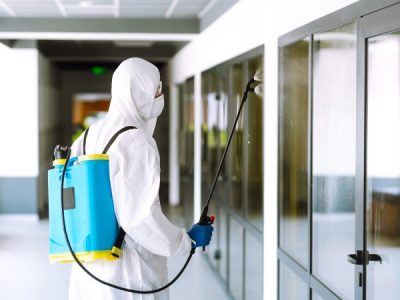
The density and heritage character of New Farm’s housing stock makes it one of the Brisbane suburbs where professional pest control provides the most meaningful advantage over DIY approaches. Supermarket products address surface-level pest activity but cannot reach colonies established in wall voids, subfloor spaces, roof voids or deep in soil. For termites, DIY products provide no viable protection at all.
Cure All Pest Control’s licensed technicians use a four-step approach to termite management covering detection, treatment, long-term protection installation and follow-up monitoring. For general pest control, treatments are tailored to the specific pests, building type and conditions at your property.
Keep Your New Farm Property Protected With Cure All Pest Control
From termite inspections in heritage Queenslanders to whole-building cockroach treatments, rodent management and bed bug control, Cure All Pest Control has the experience and local knowledge to address New Farm’s unique pest challenges.
Call us today or request a quote online to speak with a licensed technician about a pest management plan suited to your property.