There’s a quiet bit of irony in Coorparoo’s history. The suburb’s name is thought to come from “Koolpuroom,” an Aboriginal word linked to Norman Creek—and one interpretation translates to something like “place of mosquitoes.” Whether that’s spot on or not, Coorparoo has certainly lived up to the reputation. Between the winding creek, a high water table, leafy streets, and plenty of old timber homes, it’s prime real estate… not just for people, but for pests as well.
Just five kilometres from the Brisbane CBD, Coorparoo sits in an interesting sweet spot. It’s old enough to have Federation-era homes full of character (and the occasional hidden entry point), modern enough to have seen major gentrification, and green enough—with more than 30 parks packed into just 5.4 square kilometres—to keep pests comfortably at home. All that charm and greenery comes with a trade-off: the conditions that make Coorparoo so liveable also make it highly attractive to termites, rodents, and insects.
Knowing what’s active in the area—and why—can make all the difference, saving homeowners and tenants from costly damage and ongoing headaches.
Why Pest Control in Coorparoo Is More Complex Than It Looks
Coorparoo’s housing spans more than a century, and that mix plays a big role in pest activity. Federation-era Queenslanders on timber stumps sit alongside post-war homes from the 60s and 70s, while modern apartment towers rise near hubs like Coorparoo Square. Each brings its own vulnerabilities—and in Coorparoo, they’re all packed in close together.
Older timber homes are naturally more prone to termites, borers, and moisture-related issues. Mid-century brick homes often have ageing drainage and subfloor systems that attract cockroaches and rodents. In newer apartments, shared walls and plumbing make it easier for pests—especially cockroaches—to spread quickly between units.
Adding to the challenge is Coorparoo’s flood profile. Norman Creek runs through the suburb’s lower northern areas, and heavy rain can lead to inundation. These conditions can weaken termite treatments, increase moisture in structures, and drive pests out of the ground and into homes—right where you don’t want them.
Termites: Three Housing Eras, Three Risk Profiles
Termite risk in Coorparoo is not one story but three, shaped by when and how each property was built.
Federation and Interwar Queenslanders
Coorparoo’s oldest homes are its most charming and its most vulnerable. Queenslanders built between the 1880s and the 1940s were constructed predominantly from seasoned hardwood – hoop pine, hardwood bearers and joists, and timber wall framing – in an era when termite management consisted of little more than the quality of the wood itself. Many of these properties have been renovated, sometimes multiple times, by successive owners. Each renovation cycle carries its own risks: subfloor spaces accessed and partially closed off again, new timber introduced in contact with soil, moisture barriers disturbed, and chemical treatments that may have been applied at some point in the property’s history long since degraded.
Building inspectors working in Coorparoo consistently identify termites as one of the top three concerns in the suburb’s older housing stock. The prevalence of heritage Queenslanders on relatively small inner-city blocks, with mature fig trees and jacarandas growing close to the structure, creates a web of root systems and organic matter that supports subterranean termite colonies year-round.
Post-War and 1960s-80s Homes
Brick-and-tile homes from this era present a different risk pattern. They are less immediately obvious as termite targets because they are not primarily timber-framed, but termites do not need an entirely timber building to establish – they need timber somewhere in the structure, and post-war homes invariably have it in roof framing, internal wall studs, flooring and cabinetry. Chemical perimeter treatments applied when these homes were built have long since degraded, and many have never been renewed.
Modern Apartments and Coorparoo Square Development
Newer apartments receive more attention to termite management at construction, but under-slab treatments still age out. The significant infill development around Coorparoo Square and transport corridor areas has involved earthworks that disturb existing soil treatment zones, potentially opening pathways for termites into adjoining older properties.
Norman Creek Flooding and Treatment Integrity
Properties in the flood-affected northern areas of the suburb face an additional complication: when inundation occurs, soil-applied termiticide is diluted and displaced, compromising the treatment zone around the foundation. Any property that has experienced flooding since its last chemical treatment should have its termite protection status formally reassessed. Baiting systems, which do not depend on soil chemical integrity, are a more resilient option for properties in known flood-prone areas.
Warning Signs Worth Knowing
- Mud leads ascending subfloor stumps, brick piers, external walls or garden retaining structures
- Floors that feel unexpectedly soft or spring underfoot, particularly in older homes
- Skirting boards or door jambs that feel hollow when tapped
- Discolouration, lifting or blistering of paint on wall surfaces near ground level
- Wings discarded near internal windows or light fittings on warm, humid evenings
Annual inspections to Australian Standard AS 3660 are essential for all Coorparoo properties. Heritage homes and those in flood-affected areas benefit from six-monthly inspections. Cure All Pest Control uses Termatrac detection radar, thermal imaging and moisture assessment technology to locate termite activity concealed within wall cavities and subfloor spaces, without causing damage to the property.
Borer Beetles: A Queenslander-Specific Pest
Coorparoo’s concentration of Federation and interwar Queenslanders makes it worth addressing borer beetles as a distinct threat – something not warranted for suburbs with predominantly newer housing.
The Queensland Pine Beetle (Calymmaderus incisus) is the species most commonly responsible for borer damage in Brisbane’s older homes. It attacks softwood timbers – particularly hoop pine, which was widely used in Queenslander flooring, lining boards and furniture – leaving small, round exit holes and a trail of fine, powdery frass behind. Damage is cumulative and often goes unnoticed until flooring becomes structurally compromised or skirting boards begin to crumble.
In a suburb where Queenslanders are actively being renovated to high standards and resold at significant premiums, discovering borer activity mid-renovation can add substantially to repair costs. Cure All’s guide to pests in old Queensland homes covers borer identification and treatment in detail.
Cockroaches: High Density Accelerates Spread
Coorparoo’s shift from a predominantly low-density housing suburb to one where apartments now make up more than 60% of dwellings has changed the cockroach management challenge significantly. What is manageable in a detached home becomes considerably more difficult when dozens of units share walls, plumbing and common spaces.
German Cockroaches in Units and Apartments
The German cockroach (Blattella germanica) is the dominant cockroach species in Coorparoo’s apartment stock. It is found in kitchen cabinetry, behind appliances, in bathroom vanities and within the warm, humid spaces around shared plumbing penetrations. In a multi-storey building, an infestation in one unit will typically seed neighbouring apartments within weeks via shared wall voids and plumbing chases.
Treatment of an individual apartment without addressing the broader building population is rarely effective for long. A whole-building approach, coordinated through the body corporate, is necessary when German cockroaches are present in a complex. Residents who spot cockroach activity during daylight hours in kitchen or bathroom areas should report it to body corporate management promptly – visible daytime activity almost always indicates an established population rather than a casual incursion.
American and Australian Cockroaches
American cockroaches (Periplaneta americana) are a presence in Coorparoo’s older drainage infrastructure – the subfloor spaces and stormwater connections beneath homes that have been in service for decades. They are large, wide-ranging foragers that move between properties and into homes through drainage penetrations and subfloor entry points, typically at night.
Australian cockroaches (Periplaneta australasiae) are most active in gardens and organic ground cover, and enter homes through gaps around utility penetrations and under poorly sealed doors. In Coorparoo’s gentrification-era renovations – where original doors and frames have been replaced, sometimes leaving new gaps – they are a consistent indoor presence.
Prevention Tips for Coorparoo Homes
- Keep kitchen bench surfaces, appliance undersides and bin areas clean
- Seal gaps around water and gas supply lines where they enter wall cavities
- Check that subfloor vents are functioning – blocked vents trap moisture and create harbourage
- In apartments, report cockroach sightings to body corporate management rather than attempting solo treatment
- Inspect under-sink areas for slow leaks and condensation that create persistent moisture
Rodents: Mature Trees, Creek Corridors and Dense Living
Norman Creek and its network of drainage corridors through Coorparoo’s northern area function as a rodent highway – the same dynamic that operates on a larger scale along the Brisbane River in suburbs like New Farm and Indooroopilly. Rats move along creek banks and through stormwater infrastructure, and Coorparoo’s mature tree canopy provides roof rats with direct overhead pathways to residential rooflines.
Roof Rats in Heritage and Modern Properties Alike
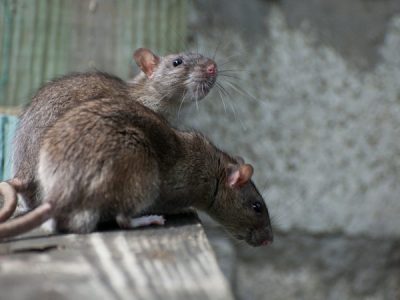
The roof rat (Rattus rattus) is the species most frequently encountered in Coorparoo ceiling voids. It exploits overhanging branches from the jacarandas, figs and poinciana trees that define many of the suburb’s residential streets, using them to reach rooflines and enter through tile gaps, loose fascia boards and unsealed vent openings. Once established, it gnaws on electrical cabling, PVC plumbing and roof insulation. The fire risk from damaged wiring is a genuine and underappreciated concern.
In older Queenslanders, the subfloor space provides an alternative harbour for roof rats. Subfloor voids that are inadequately screened or that have accumulated timber debris and organic material are particularly attractive nesting sites.
Norway Rats and Mice
Norway rats (Rattus norvegicus) are present along the Norman Creek corridor and in the garden beds and waste areas of Coorparoo’s commercial dining strip. They burrow in soil and are more commonly encountered at ground level than in roof spaces. Properties near Coorparoo Square’s café and restaurant precinct, where food waste is generated at scale, tend to experience higher Norway rat pressure than those on residential-only streets.
House mice are a reliable indoor problem in older properties with the minor gaps and cracks that develop in ageing plasterwork, weatherboards and subfloor framing. In Coorparoo’s rental and student-share history – the suburb spent decades as one of inner Brisbane’s more affordable housing options – a degree of deferred maintenance in some older properties has created persistent rodent entry pathways that renovation doesn’t always address.
Ants: Active Species in a Green, Established Suburb
Coorparoo’s 30-plus parks and established residential gardens sustain active ant populations across several species.
Coastal Brown Ants and the Budding Trap
The coastal brown ant (Pheidole megacephala) is the most problematic species in Coorparoo homes. Its colonies are large and multi-sited, extending beneath pavers, along fence lines and into wall voids. Incomplete treatment – the typical outcome of over-the-counter sprays and surface baits – causes these colonies to bud, distributing the population across wider territory and making eradication progressively harder. Professional treatment addressing the full colony structure is necessary for reliable control.
Black House Ants and Garden Species
Black house ants trail into kitchens and bathrooms in pursuit of sugar and moisture, entering through the many small penetrations common in Coorparoo’s older properties. Green-headed ants are active in the suburb’s garden beds and parks, delivering a sharp sting when disturbed. Properties near Whites Hill Reserve or Langlands Park encounter a broader range of native species along the bushland fringe.
Mosquitoes: A Real Sucker
Norman Creek and its associated low-lying areas retain moisture that sustains mosquito breeding well beyond the wet season, and the suburb’s significant tree canopy provides the shaded, humid resting habitat that adult mosquitoes seek during daylight hours.
Residents in the northern areas of the suburb – particularly those north of Old Cleveland Road where flood risk is highest and the creek’s influence is most pronounced – tend to notice considerably more mosquito pressure than those in elevated southern sections. After significant rainfall events, this difference becomes especially pronounced.
Reducing Breeding Habitat Around the Home
- Empty any container that holds standing water after rain – pot plant saucers, buckets, outdoor ornaments and clogged gutters are the most common culprits
- Refresh bird baths at least twice weekly
- Treat permanent water features and ornamental ponds with biological larvicide
- Ensure subfloor drainage beneath older homes is functioning and unobstructed
- Install or repair fly screens before the wet season begins in November
Spiders: 30-Plus Parks Mean Frequent Encounters
Coorparoo’s extensive green space brings a variety of spider species close to residential properties. The suburb has Whites Hill Reserve on its south-eastern edge, Langlands Park near the creek, and numerous smaller parks and tree corridors throughout – all of which provide habitat that supports spider populations year-round.
Redback spiders (Latrodectus hasselti) are reliably found in Coorparoo gardens, garages, subfloor spaces and outdoor structures. They are present throughout the year and most active in summer. Their bite requires medical attention.
White-tailed spiders are among the most common indoor spider species in Coorparoo homes, found particularly in bedrooms and bathrooms where they hunt other spiders. In older properties with gaps in weatherboards and subfloor vents, they have easy internal access throughout the building.
Huntsmen spiders are a consistent presence in Coorparoo’s older housing stock – properties with character and gaps both invite them readily. They are harmless but reliably generate pest control enquiries, particularly when encountered in bedrooms at night.
The Renovation Risk: Disturbing Dormant Problems
Coorparoo’s gentrification wave deserves specific attention from a pest management perspective. Building inspectors working in the suburb consistently identify termites, flood damage and the quality of previous renovations as the three issues they encounter most frequently. The intersection of the first and third is particularly relevant.
When a Queenslander or post-war home undergoes renovation – whether a cosmetic refresh or a full structural overhaul – several pest-related risks emerge. Subfloor spaces that have been partially sealed over the years may contain undiscovered termite activity or borer damage that becomes accessible during renovation. New timber introduced in contact with existing soil or treated areas may not be properly protected. Chemical treatment zones, if they existed, may be disrupted by earthworks, new drainage or foundation work.
Coorparoo properties purchased for renovation should receive a thorough pre-purchase pest inspection before any structural work begins, and ideally before the purchase contract is unconditional. Discovering active termites after you have committed to a purchase and begun stripping floors is a far more expensive and stressful outcome than identifying the problem during due diligence.
Seasonal Pest Patterns in Coorparoo
Coorparoo follows Brisbane’s subtropical seasonal rhythm, with the creek corridor and mature canopy amplifying activity at peak periods:
- Summer (December – February): Mosquito and cockroach activity peaks sharply. Flying termites swarm on humid evenings following afternoon storms. Rodents are active near the creek corridor and café precincts.
- Autumn (March – May): Elevated soil moisture following the wet season keeps termite colony activity high. Rodents begin moving into ceiling voids as overnight temperatures drop. Spider populations remain elevated after summer breeding.
- Winter (June – August): Drier conditions make this the best window for accurate termite inspections. Cockroaches remain active indoors. A good time to identify subfloor conditions and seal entry points ahead of spring.
- Spring (September – November): Termite swarming season begins. Ant colonies expand rapidly with warming temperatures and early rain. Mosquito numbers climb with the first significant storms.
Pre-Purchase Inspections in a Gentrifying Suburb
With Coorparoo’s median house price now sitting well above $1.5 million, the financial consequences of missing a termite or borer problem at purchase are significant. A pre-purchase pest inspection is not a precaution for nervous buyers – it is a sensible baseline for anyone purchasing in a suburb where the housing stock spans a century of construction and where flood events have periodically compromised existing treatments.
Cure All Pest Control’s termite inspection service uses thermal imaging and moisture detection technology to identify active termite activity and risk conditions that standard building inspections do not assess. For properties in Coorparoo’s older housing pockets, this level of assessment should be considered essential rather than optional before purchase.
Protect Your Coorparoo Property With Cure All Pest Control
Whether you own a heritage Queenslander on a tree-lined street, a renovated post-war home near the creek, or a modern apartment in Coorparoo Square, the pest pressures in this suburb are real and varied. Cure All Pest Control’s licensed technicians understand the specific challenges of inner-south Brisbane’s older housing stock and provide a four-step approach to termite management alongside tailored general pest treatments for your property type and conditions.
Call us today or request a quote online to arrange a thorough inspection or discuss a pest management plan suited to your home or business.